
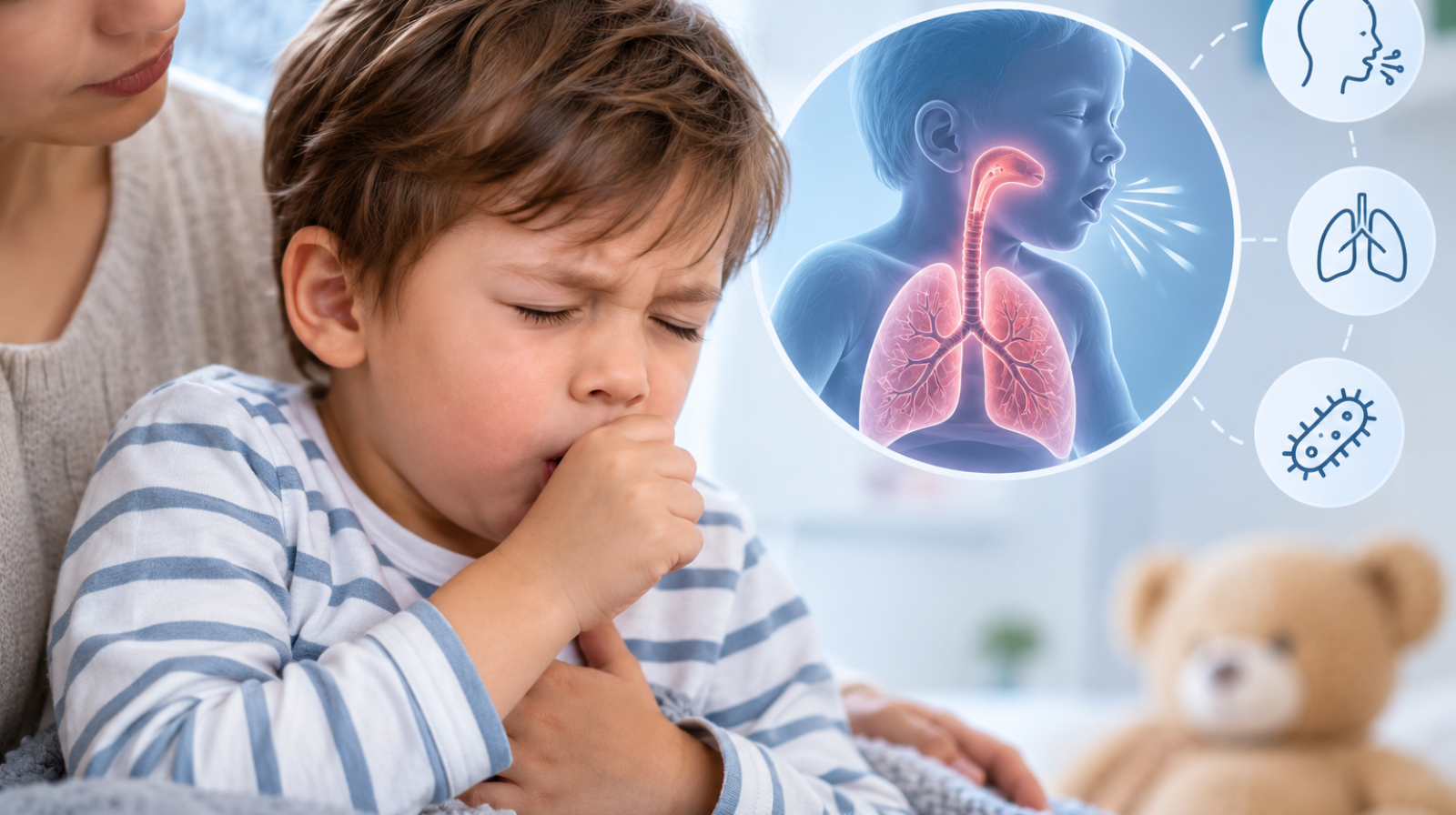
Symptoms of Pertussis (Cough) in Children: A Disease That Should Never Be Underestimated
Pertussis (known as 'bouhamrone' in Morocco) is a highly contagious bacterial respiratory infection caused by Bordetella pertussis. Despite the existence of an effective vaccine, it continues to circulate and represents a real danger, particularly for infants under 6 months of age who are not yet fully vaccinated. Recognizing its symptoms quickly can save lives.
Why Is Pertussis So Dangerous in Young Children?
In infants, pertussis can cause coughing fits so severe that they lead to pauses in breathing (apnea), cyanosis (bluish discoloration of the skin due to a lack of oxygen), and even serious neurological complications. It is one of the few childhood diseases that can still be fatal in Morocco and worldwide among unvaccinated infants.
The Three Stages of the Disease
Stage 1: The Catarrhal Stage (1 to 2 Weeks)
This initial stage resembles a simple cold, making diagnosis difficult at this point:
• Clear runny nose
• Mild, dry cough
• No fever or very mild fever
• Occasional sneezing
Paradoxically, this is the period when the child is MOST contagious, even though the diagnosis is generally not yet suspected.
Stage 2: The Paroxysmal Stage (2 to 6 Weeks) — The Characteristic Stage
It is at this stage that the symptoms become typical and alarming:
• Severe coughing fits, occurring in rapid bursts and difficult to stop
• Whooping sound: a loud, whistling intake of breath at the end of a coughing fit, characteristic of the disease
• Frequent vomiting after coughing fits
• Red or bluish face (cyanosis) during coughing fits
• Significant exhaustion after each episode
• In infants: coughing fits may be replaced by pauses in breathing (apnea) WITHOUT characteristic coughing — a major warning sign that is often overlooked
Stage 3: The Convalescent Stage (Weeks to Months)
The cough gradually decreases in frequency and intensity but may persist for several weeks or even months. It is sometimes called the '100-day cough'.
Specific and Alarming Signs in Infants
In babies under 6 months of age, the presentation is often atypical and particularly dangerous:
• Episodes of apnea (pauses in breathing) without marked coughing
• Cyanosis (bluish discoloration of the lips and face)
• Difficulty feeding during coughing fits
• Extreme exhaustion
• Bradycardia (slowing of the heart rate) during severe episodes
In infants, ANY suspicion of pertussis requires urgent medical attention, even in the absence of a typical cough.
How Is Pertussis Transmitted?
Transmission occurs through the air, via saliva droplets released when coughing, sneezing, or even talking. An infected person is contagious from the catarrhal stage (even before the typical symptoms appear) and remains contagious for approximately 3 weeks without treatment, or for only 5 days after starting appropriate antibiotic treatment.
Important fact: adults and adolescents whose vaccine-induced immunity has waned may develop a mild form of pertussis (a persistent, often overlooked cough) and unknowingly transmit it to an unprotected infant — this is the main mode of transmission to babies.
When Should You Seek Emergency Medical Care?
• Any pause in breathing or episode of cyanosis in an infant
• Difficulty breathing between coughing fits
• Repeated vomiting that prevents feeding
• Extreme fatigue, a lethargic child who is difficult to wake
• Any suspicion of pertussis in a baby under 3 months of age
Diagnosis and Treatment
Diagnosis
Diagnosis is based on a clinical examination (especially during the typical paroxysmal stage), confirmed by a nasopharyngeal sample (PCR), which identifies the bacteria and is particularly reliable during the first 3 weeks.
Treatment
Antibiotics (macrolides: azithromycin, clarithromycin) are effective when administered early, during the catarrhal stage. Once the paroxysmal stage has begun, they mainly reduce contagiousness rather than the duration of symptoms.
Infants with severe forms require hospitalization for respiratory and cardiac monitoring, sometimes in an intensive care unit.
Vaccination: The Best Protection
The pertussis vaccine is part of Morocco's national immunization program (PNI), integrated into the combined vaccine (DTP-Hib-HepB, the pentavalent vaccine). The vaccination schedule includes several doses starting in the first months of life.
• The infant is not fully protected until after the 3rd dose, generally around 4–5 months
• Pregnant women are increasingly encouraged to get vaccinated during the 3rd trimester to transfer protective antibodies to the baby before birth
• Booster doses for adolescents and adults (particularly expectant parents and grandparents) reduce the risk of transmission to infants — this is the 'cocooning' strategy
Which Doctor Should You Consult in Morocco?
• Pediatrician: for any suggestive symptoms in a child → docdialy.com/pediatrician
• General practitioner: for vaccination and family follow-up → docdialy.com/general-practitioner
Conclusion
Pertussis remains a potentially serious disease, particularly in infants who are not fully vaccinated. Knowing how to recognize its early signs and seeking medical attention promptly, combined with keeping the entire family's vaccinations up to date, are the best tools against this disease.
If your child has a persistent cough or you have any doubts, consult a pediatrician on Docdialy without delay.
→ Find a pediatrician in Morocco: docdialy.com/pediatrician