
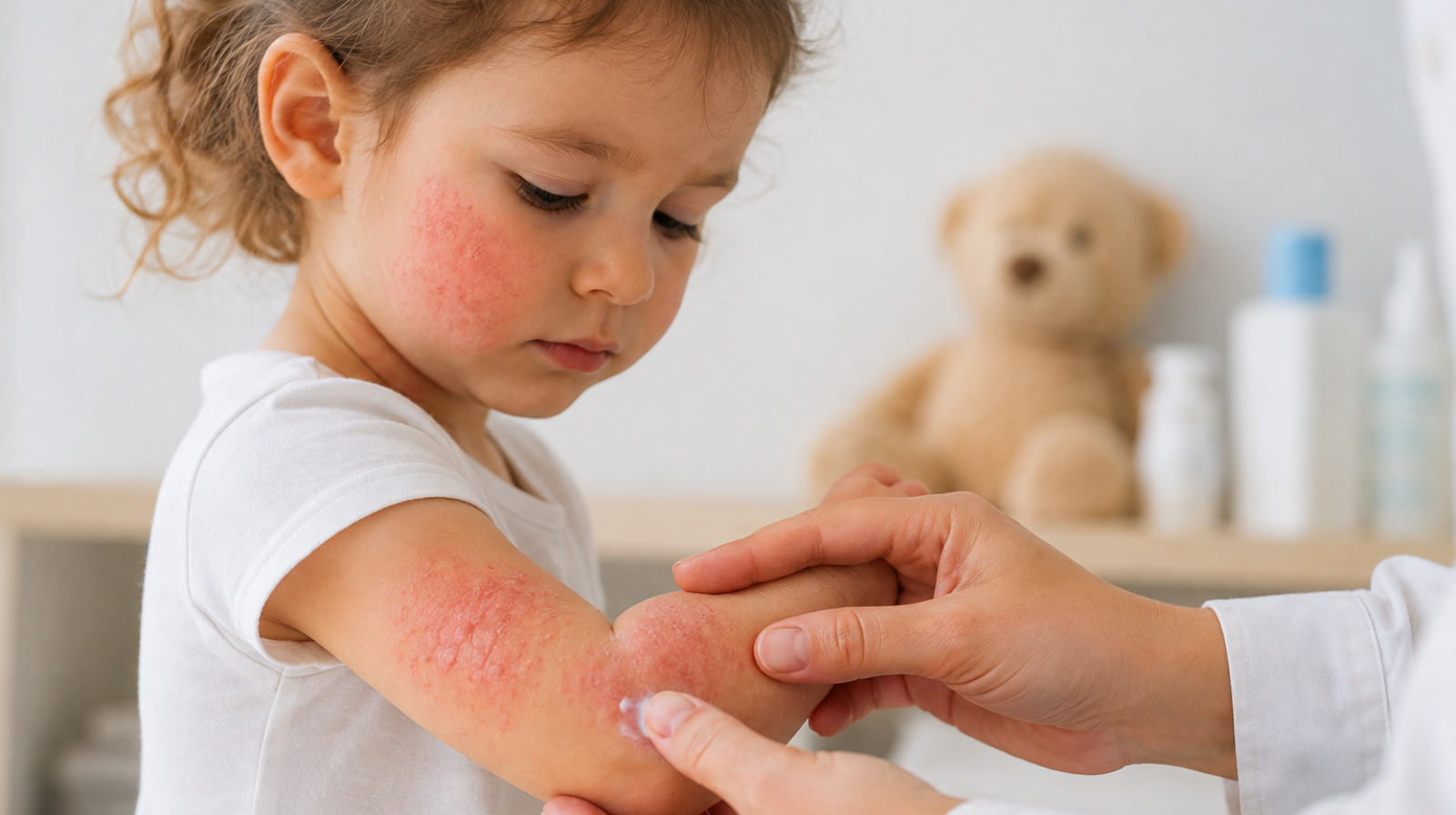
Skin Allergies in Children: How to Recognize, Treat, and Prevent Them
Skin allergies in children are among the most common reasons for pediatric consultations. They can sometimes look alarming and worrying for parents, but most are mild and can be well controlled with appropriate care. Learning how to recognize them is the first step.
The Most Common Skin Allergies in Children
1. Atopic Dermatitis (Eczema)
Atopic dermatitis is one of the most common inflammatory skin conditions in children, affecting around 15–20% of children in industrialized countries. It often begins before the age of 5 and may persist into adolescence.
Symptoms:
- Red, dry, scaly patches
- Intense itching, often worse at night
- Location varies with age: cheeks and forehead in infants, elbow and knee folds in older children
- Generally dry and sensitive skin between flare-ups
- Symptoms that come and go in flares and periods of remission
Common triggers:
- Harsh soaps and detergents
- Synthetic fabrics or wool
- Excessive sweating
- Stress and viral infections
- Certain foods, such as eggs, milk, and peanuts, especially in infants
2. Hives (Urticaria)
Hives appear as raised, red, and very itchy patches that usually come and go within 24 hours. They can be acute, lasting less than 6 weeks, or chronic.
- Allergic causes: foods such as strawberries, shellfish, peanuts, and eggs; medications; insect bites
- Non-allergic causes: viral infections, which are very common in children, as well as cold, heat, or pressure
- Angioedema: deeper swelling of the lips, tongue, or eyelids — an emergency if it affects breathing
3. Contact Dermatitis
Contact dermatitis is a localized reaction caused by direct contact with an allergen or irritant.
Common triggers include:
- Costume jewelry containing nickel
- Cosmetics, shampoos, and perfumes
- Latex, such as gloves and balloons
- Plants such as nettles, poison ivy, or poison sumac
- Textile dyes
4. Allergic Reactions to Insect Bites and Stings
Most reactions to insect bites and stings are local and mild. However, in children with severe allergies, a bee, wasp, or hornet sting can trigger anaphylaxis — a life-threatening emergency requiring immediate administration of adrenaline (epinephrine).
When Should You Seek Emergency Care?
Certain symptoms require immediate medical attention:
- Difficulty swallowing or breathing after an insect sting or eating a food
- Rapid swelling of the face, tongue, or neck
- Loss of consciousness or sudden paleness
- Widespread hives accompanied by fever and a significant deterioration in the child's general condition
Treatments for Skin Allergies in Children
Treatment depends on the type of skin allergy, its severity, and the child's age.
Eczema
- Daily emollients: the foundation of treatment, helping restore the skin barrier
- Topical corticosteroids: for flare-ups, used for a short period and adapted to the affected area
- Calcineurin inhibitors (tacrolimus): an alternative to topical steroids for sensitive areas
- Antihistamines: may sometimes be used to help manage itching
- Dupilumab: a biologic treatment that may be prescribed for certain severe forms of eczema in eligible children
Hives
- H1 antihistamines: a mainstay of treatment for urticaria
- Oral corticosteroids: sometimes used for short courses in severe cases
- Epinephrine auto-injector: for children at risk of anaphylaxis
Contact Dermatitis
- Avoiding the allergen: the priority measure
- Topical corticosteroids: to relieve acute inflammation when prescribed
- Allergy assessment with patch testing: to identify the specific allergen responsible
Which Specialist Should You See in Morocco?
If your child has Skin allergies in children, different healthcare professionals can help depending on the symptoms and suspected cause:
- Pediatrician: for an initial assessment and children's allergies → docdialy.com/pediatrician
- Dermatologist: for eczema and other skin conditions → docdialy.com/dermatologist
- Allergist: for a complete allergy assessment and skin allergy testing → docdialy.com/Allergologist
Conclusion
Skin allergies in children are common and can sometimes look alarming, but they are often manageable with appropriate care. An accurate diagnosis helps identify potential triggers and allows treatment to be adapted to prevent or reduce future flare-ups.
Is your child experiencing a skin allergy? Consult a pediatrician or dermatologist on Docdialy for appropriate evaluation and care.