Nicotine Spray: A Fast-Acting Aid to Help You Quit Smoking
Quitting smoking first means facing nicotine withdrawal: irritability, difficulty concentrating, and overwhelming cravings for cigarettes. Nicotine replacement therapies (NRT) help relieve these symptoms. Among them, the nicotine spray, also known as a nicotine mouth spray, stands out for its fast-acting effect.
Returning home, starting a new year, or planning a family: many smokers choose a symbolic moment to quit. Nicotine spray can be a helpful ally, provided it is used correctly. Its availability varies between pharmacies, so ask your pharmacist for advice before starting treatment.
1. What Is Nicotine Spray?
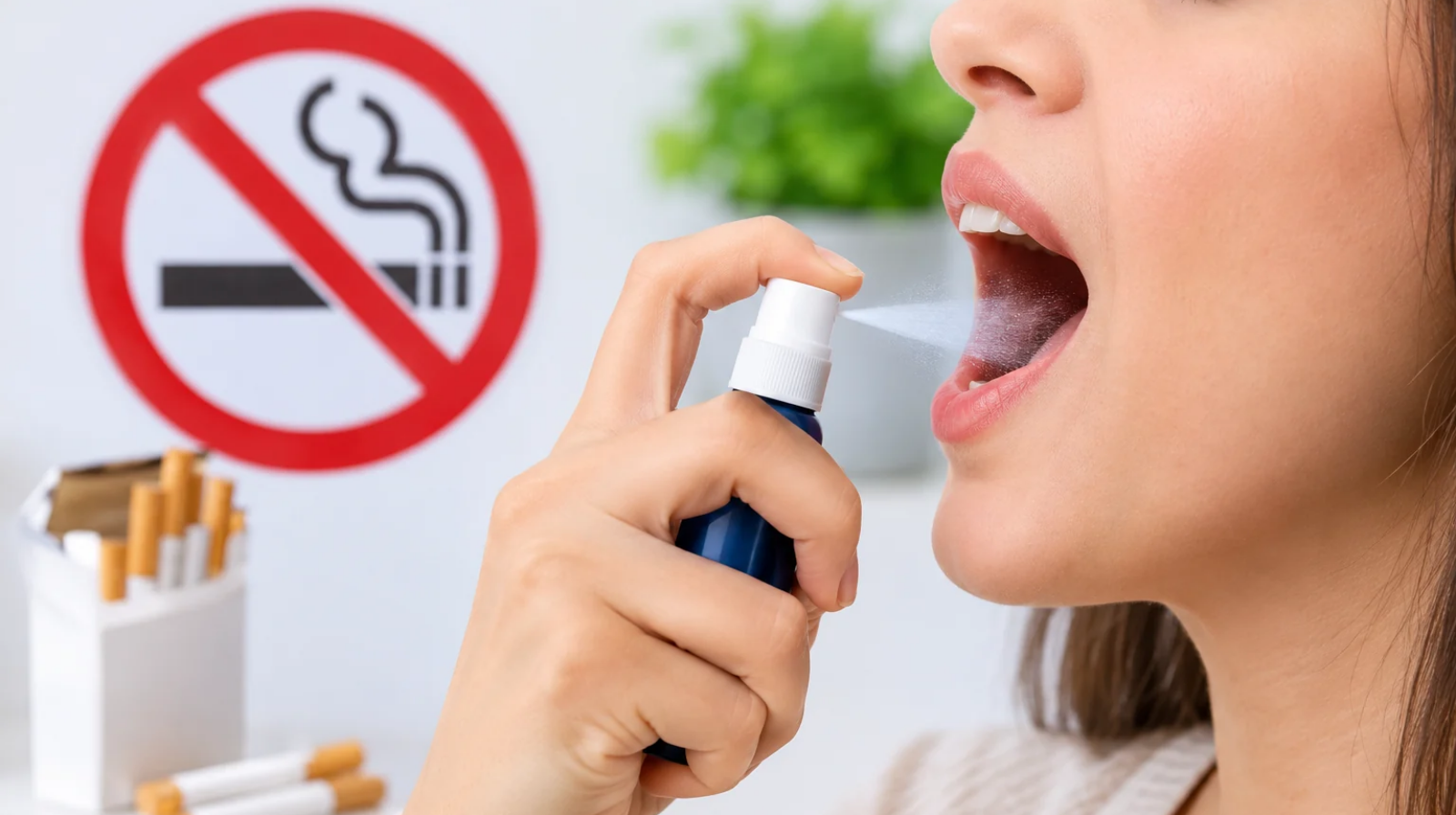
Nicotine spray is a small bottle that delivers a measured dose of nicotine into the mouth. Nicotine is absorbed into the bloodstream through the oral mucosa (the lining of the cheeks and the area beneath the tongue). Each spray delivers a small amount of nicotine and can relieve a cigarette craving in approximately one minute.
It should not be confused with an e-cigarette: nicotine spray does not produce vapour to inhale. It is a nicotine replacement medicine, just like patches, gum, and lozenges. A nasal spray is also available, although it is less commonly used and is mainly intended for heavy smokers.
2. Who Is It For?
Nicotine spray may be suitable for:
-
Smokers who want to quit or reduce their tobacco consumption.
-
Former smokers who are concerned about relapsing.
-
People who need fast relief when sudden cravings occur.
People who have never smoked should not use nicotine spray. If you are pregnant, breastfeeding, have heart disease, or are taking medication, seek advice from a doctor or pharmacist before using it.
3. How to Use Nicotine Spray Correctly
-
Prime the bottle before first use, following the instructions in the patient leaflet.
-
Hold the nozzle as close as possible to your open mouth.
-
Spray towards the inside of your cheek or beneath your tongue.
-
Do not inhale while spraying, and avoid directing the spray towards your throat.
-
Avoid spraying your lips, as this may cause a burning sensation.
-
Do not swallow immediately, and avoid eating or drinking while using the spray.
A common mistake is using the spray like a breath freshener by directing it towards the back of the throat. This can cause the nicotine to be swallowed, reducing its effectiveness.
4. How Many Sprays Should You Use?
Nicotine spray should be used when a craving occurs. Ideally, anticipate situations that may trigger the urge to smoke, such as having coffee, finishing a meal, or taking a break at work.
The number of sprays per dose, per hour, and per day is strictly regulated by the product instructions and must never be exceeded. Your pharmacist or doctor can help you adjust its use according to your level of nicotine dependence.
5. How Long Should Treatment Last?
Treatment generally lasts up to 12 weeks. Around weeks 10 to 12, the dosage is gradually reduced.
Treatment can be stopped when you are using only 2 to 4 sprays per day. Using nicotine spray for more than 6 months is not recommended. If you find it difficult to stop, speak to a healthcare professional.
6. Combining Treatments for Better Results
Clinical guidelines show that combining a long-acting nicotine replacement therapy (such as a patch, which releases nicotine throughout the day) with a fast-acting option (such as a spray, gum, or lozenge) is the most effective approach.
This combination is considered safe when used correctly. Support from a smoking cessation professional can further increase your chances of successfully quitting.
7. Possible Side Effects
Nicotine spray may cause some side effects, particularly when treatment is first started:
-
Hiccups, especially during the first few days.
-
Mouth or throat irritation and a burning sensation.
-
Nausea and headaches.
-
Changes in taste.
These effects are often associated with incorrect spraying technique and tend to decrease over time.
It is worth remembering that nicotine replacement therapies are considerably less harmful than smoking cigarettes. Nicotine itself is not responsible for most smoking-related diseases; the toxic substances in tobacco smoke cause the majority of the harm.
8. Beyond Nicotine Spray: How to Increase Your Chances of Success
Nicotine replacement therapy addresses physical withdrawal, but the behavioural habit of smoking remains. A few strategies can make a significant difference:
-
Choose a quit date and tell your friends and family about your decision.
-
Identify situations that trigger your cravings.
-
Replace the smoking habit with another activity, such as walking or drinking a glass of water.
-
Avoid situations associated with smoking during the first few weeks.
A relapse does not mean failure. Most former smokers made several attempts before successfully quitting.
The health benefits of quitting begin very quickly. Breathing improves, your sense of taste and smell gradually return, and your risk of cardiovascular disease decreases over time. Every cigarette you avoid makes a difference, both for your health and for those around you who may be exposed to second-hand smoke.
9. Which Specialist Should You Consult in Morocco?
A general practitioner can assess your level of nicotine dependence, suggest a smoking cessation plan, and determine whether nicotine replacement therapy is suitable for you. This is particularly important if you have heart disease, are pregnant, or are taking medication.
If stress or anxiety makes quitting difficult, a psychologist can provide additional support. Your pharmacist, including at an on-duty pharmacy, can also explain how to use nicotine spray correctly.
-
General Practitioner: docdialy.com/general-practitioner
-
Psychologist: docdialy.com/psychologist
-
Cardiologist: docdialy.com/cardiologist
-
On-Duty Pharmacies: docdialy.com/on-duty-pharmacies
-
Teleconsultation: docdialy.com/teleconsultation
10. Frequently Asked Questions
Is nicotine spray the same as an e-cigarette?
No. Nicotine spray is a nicotine replacement medicine that is sprayed directly into the mouth. It does not produce vapour to inhale.
Can I use nicotine spray with a nicotine patch?
Yes. Combining a nicotine patch with a fast-acting replacement therapy, such as nicotine spray, is a recommended approach for people with nicotine dependence.
Where can I buy nicotine spray?
Nicotine spray is available from pharmacies. Your pharmacist can advise you on the most suitable product and how to use it.
11. Conclusion
Nicotine spray will not quit smoking for you, but it can make withdrawal symptoms more manageable when cravings are at their strongest. When combined with a nicotine patch and professional support, it can significantly improve your chances of successfully quitting.
Ready to quit smoking with professional support? Book an appointment with a general practitioner or smoking cessation specialist through Docdialy.
Book your appointment on Docdialy: docdialy.com/medecin-generaliste | docdialy.com/teleconsultation
References
-
HSE (Ireland) – Nicotine Mouth Spray. hse.ie
-
NHS – Stop Smoking Treatments. nhs.uk
-
Healthwell (Health and Social Care Northern Ireland) – Nicotine Mouth Spray. healthwell.eani.org.uk
-
Electronic Medicines Compendium (UK) – Nicorette QuickMist, Patient Information Leaflet. medicines.org.uk
-
WHO – Guidelines on Tobacco Cessation. who.int
Disclaimer: This article is provided for informational purposes only and does not replace a medical consultation.