Early Gallbladder Symptoms: Signs You Shouldn’t Ignore
The gallbladder is a small, pear-shaped organ beneath the liver. It stores bile, a fluid that helps digest fats. Gallstones are a common cause of gallbladder problems. These small, hardened deposits often go unnoticed, but if one blocks the flow of bile, it can trigger a painful gallbladder attack.
Friday couscous, pastries, and family feasts can mean eating richer meals than usual during a stay in Morocco. A gallbladder attack can occur after a heavy meal, sometimes while you’re away from your usual doctor. Recognising early gallbladder symptoms can help you decide when to seek care.
1. Gallstones often cause no symptoms
Most people with gallstones have no symptoms. These are called silent gallstones and usually don’t require treatment. Symptoms typically begin when a stone blocks a bile duct.
2. The first noticeable sign is often biliary colic
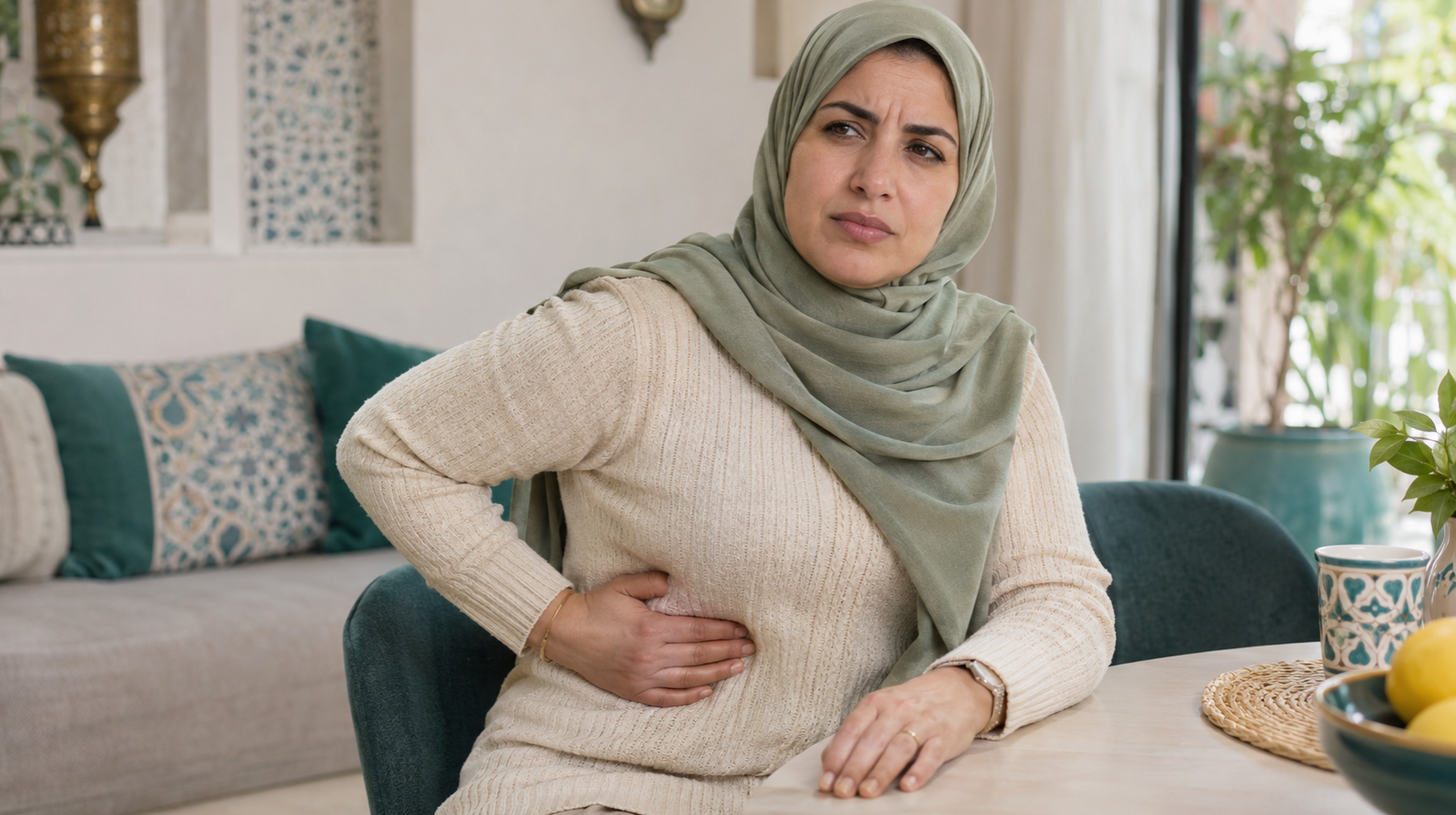
Biliary colic, also called a gallbladder attack, typically causes steady pain in the upper right abdomen, just below the ribs, or in the upper middle abdomen, below the breastbone. The pain can spread to the back or right shoulder blade, become intense, and last several hours. Nausea and vomiting can also occur.
When do gallbladder attacks happen?
An attack may follow a large or fatty meal, when the gallbladder contracts to release bile. Attacks often occur in the evening or at night. After a first attack, further episodes are likely.
How can you tell whether it’s indigestion?
The location and duration of the pain can offer clues. Steady pain under the right ribs that lasts for hours, especially if it spreads to the back or shoulder, is typical of a gallbladder attack. Reflux, a stomach ulcer, and pancreatitis can cause similar symptoms, so a medical assessment is needed to determine the cause.
3. Warning signs that need urgent medical care
A gallstone that stays lodged in a duct can cause inflammation or infection in the gallbladder or bile ducts, or inflammation of the pancreas. Seek urgent medical care if you have any of the following symptoms.
-
Abdominal pain that lasts several hours
-
Fever, even a mild one, or chills
-
Yellowing of the skin or the whites of the eyes, known as jaundice
-
Dark, tea-coloured urine or pale stools
-
Persistent nausea or vomiting
4. Who is more likely to develop gallstones?
Gallstones are more common in women, particularly during pregnancy or among those taking oestrogen as part of menopausal hormone therapy. The risk also increases with age, a family history of gallstones, overweight or obesity, and rapid weight loss, including weight loss from very restrictive diets. Eating patterns high in calories and refined carbohydrates and low in fibre may also play a role.
5. How are gallstones diagnosed and treated?
A doctor will ask about your symptoms and examine your abdomen, paying particular attention to the area below the right ribs. An abdominal ultrasound is usually the first imaging test used to look for gallstones. Blood tests can help identify signs of inflammation, infection, or a blocked bile duct.
If gallstones cause symptoms or complications, your doctor may recommend removing the gallbladder. This procedure, called a cholecystectomy, is usually performed through small incisions using keyhole surgery. Most people can live normally without a gallbladder.
6. Can you prevent gallbladder attacks?
Maintaining a healthy weight, losing weight gradually if needed, and eating a balanced diet rich in fibre may help reduce the risk of developing gallstones. Choose sources of unsaturated fat, such as olive oil, and limit fried foods. If you’ve already had an attack, your doctor can advise you on what to eat while you wait for further assessment or treatment.
7. Which specialist should you see in Morocco?
A general practitioner can examine you and refer you for an abdominal ultrasound. A gastroenterologist can review your symptoms and test results, discuss treatment options, and refer you to a surgeon if needed.
If you have severe pain, fever, or jaundice, go to the nearest emergency department. In Morocco, you can call 141 for SAMU or 15 for Civil Protection.
8. Frequently asked questions
What is usually the first sign of a gallbladder problem?
If gallstones cause symptoms, the first noticeable sign is often steady pain in the upper right abdomen. It may occur after a heavy meal, spread towards the right shoulder, and last several hours.
Can gallstones go away on their own?
An attack may stop when a stone shifts and bile can flow again. Other stones may still be present, and further attacks can occur.
Do silent gallstones require surgery?
Gallstones found incidentally that cause no symptoms usually don’t need treatment.
9. Conclusion
Most gallstones cause no symptoms. If pain under your right ribs keeps coming back after meals, get it checked. An abdominal ultrasound can often show whether gallstones are present.
Do you regularly feel pain under your right ribs after eating? Book an appointment with a gastroenterologist in Morocco on Docdialy.
References
-
NIDDK. Diagnosis of Gallstones
-
NIDDK. Treatment for Gallstones
-
MedlinePlus. Gallstones
This article is for informational purposes only and does not replace a medical consultation.