
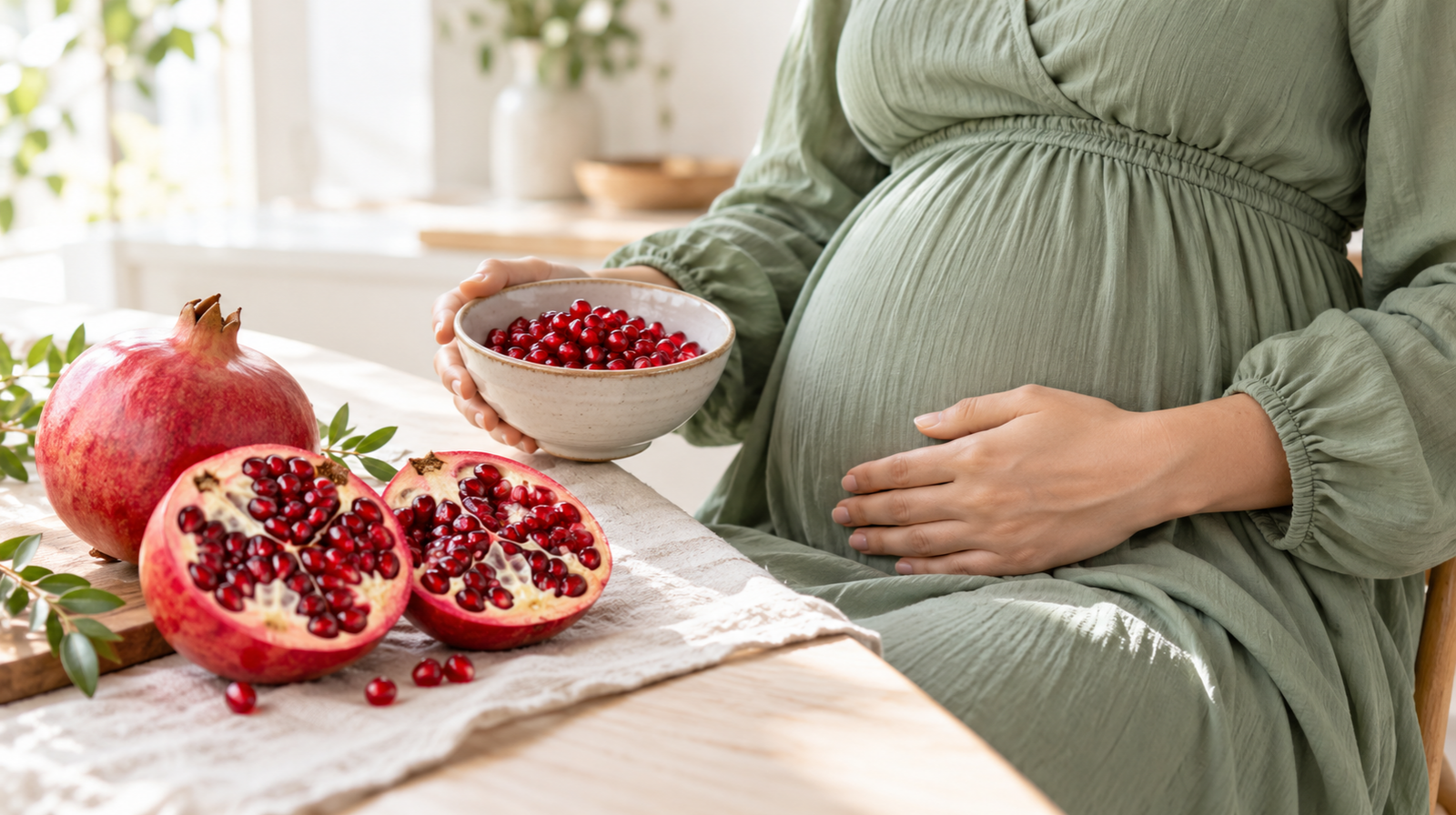
Benefits of pomegranate for pregnant women: a fruit with multiple nutritional advantages
With its ruby-red colour and juicy seeds, pomegranate (رمان) is much more than a popular seasonal fruit in Morocco. Rich in antioxidants, vitamins and essential minerals, it offers numerous benefits that are particularly relevant during pregnancy, a time when women's nutritional needs increase considerably.
The nutritional composition of pomegranate
• Vitamin C: a powerful antioxidant that strengthens immunity and promotes iron absorption
• Vitamin K: essential for blood clotting
• Folic acid (vitamin B9): crucial for preventing neural tube defects in early pregnancy
• Potassium: regulates blood pressure and fluid balance
• Iron: helps prevent anaemia, which is very common during pregnancy
• Fibre: promotes bowel movements, which often slow down during pregnancy
• Polyphenols and antioxidants (punicalagins): among the most concentrated of any fruit, with documented anti-inflammatory effects
Benefits of pomegranate for pregnant women
1. A powerful source of antioxidants
Pregnancy is accompanied by increased oxidative stress, linked to a rise in maternal metabolism and the needs of the placenta. The antioxidants in pomegranate (among the most powerful in the plant kingdom) help neutralise free radicals and may help protect the placenta and support its proper functioning.
2. Support in preventing anaemia
Iron-deficiency anaemia affects a significant proportion of pregnant women, particularly in the second and third trimesters due to increased blood volume. Pomegranate, rich in iron and vitamin C (which optimises iron absorption), is an interesting addition to the diet, without replacing prescribed supplementation in cases of confirmed deficiency.
3. Help with constipation
The fibre in pomegranate promotes bowel movements, helping relieve the constipation that is common during pregnancy, linked to the effects of progesterone on intestinal motility and the pressure of the growing uterus on the colon.
4. Support for foetal brain development
Some preliminary studies suggest that regular consumption of pomegranate juice during pregnancy may have a protective effect on foetal brain development, particularly in cases of intrauterine growth restriction, by reducing oxidative damage at the placental level. However, these findings still need to be confirmed by larger studies.
5. Blood pressure regulation
The potassium in pomegranate contributes to fluid balance and may help regulate blood pressure, a major concern during pregnancy, when gestational hypertension and pre-eclampsia are complications that require monitoring.
6. Stronger immunity
The vitamin C and antioxidant compounds in pomegranate support the immune system, which naturally changes during pregnancy to tolerate the foetus, sometimes making pregnant women more vulnerable to certain infections.
7. A useful source of hydration
Made up of more than 80% water, pomegranate contributes to overall hydration, which is particularly important during pregnancy.
How to consume pomegranate during pregnancy
• Fresh seeds: the most complete way to benefit from its fibre and nutrients
• Fresh pomegranate juice (rather than sweetened commercial juice): convenient and concentrated in antioxidants
• In salads: mixed with other fruits or added to savoury salads
• As a natural homemade syrup: to flavour dishes or drinks
Always choose fresh pomegranate or freshly squeezed homemade juice rather than commercial juices, which are often loaded with added sugars.
Precautions to take
• Wash the fruit thoroughly before opening it to avoid contamination
• Consume in moderation: as with any food, excess is never recommended — a reasonable daily portion (half a fruit or a glass of fresh juice) is sufficient
• Be aware of drug interactions: pomegranate juice may interact with certain medicines, particularly some antihypertensives and anticoagulants, by altering their metabolism in the liver
• If you have gestational diabetes, monitor your intake because of the fruit's natural sugar content and discuss it with your doctor
• This fruit never replaces prescribed medical treatment (iron or folic acid supplementation) in cases of confirmed deficiency
Which specialist should you consult in Morocco?
• Obstetrician-gynaecologist: for comprehensive pregnancy care → docdialy.com/gynaecologist
• Dietitian: for a personalised eating plan during pregnancy → docdialy.com/dietitian
• General practitioner: for any general health questions → docdialy.com/general-practitioner
Conclusion
Pomegranate is a valuable nutritional ally during pregnancy: rich in antioxidants, iron and fibre, it may contribute to the overall well-being of expectant mothers. As with any food, moderation remains the rule, and it never replaces appropriate medical care.
For personalised nutritional advice during your pregnancy, consult a healthcare professional on Docdialy.
→ Find a gynaecologist in Morocco: docdialy.com/gynaecologist