
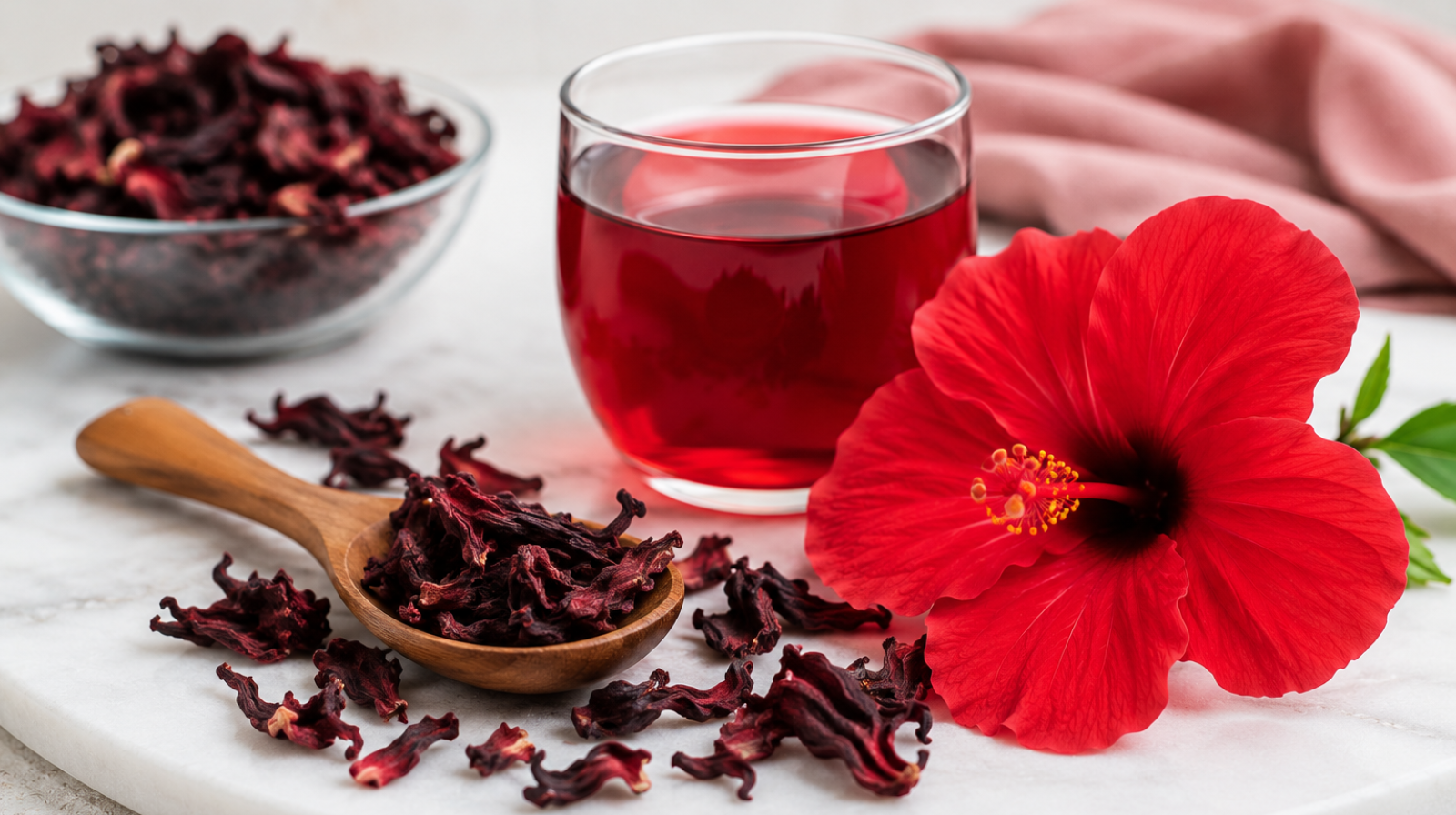
Benefits of Hibiscus for the Skin: Between Science and Tradition
Hibiscus — known as karkadé in Morocco and throughout the Arab world — has been a central plant in traditional medicine for centuries. Today, it is gaining increasing popularity in the world of skincare and natural beauty. But what does science actually say about the Benefits of hibiscus for the skin?
Docdialy presents an objective overview to help distinguish scientifically supported benefits from claims that remain anecdotal.
Hibiscus Composition: Why Is It of Interest in Dermatology?
The hibiscus flower (Hibiscus sabdariffa) contains a remarkable concentration of bioactive compounds:
- Anthocyanins: powerful red pigments with antioxidant properties that help neutralize free radicals responsible for cellular damage and aging
- Citric acid and malic acid: gentle natural exfoliating acids that may support skin cell renewal
- Amino acids and mucilage: moisturizing compounds that help retain water in the superficial layers of the skin
- Vitamin C: essential for collagen synthesis and overall skin radiance
- Hibiscus acid: a compound specific to hibiscus that has been studied for its potential anti-inflammatory properties
The Proven or Well-Documented Benefits of Hibiscus for the Skin
1. Antioxidant Properties
This is one of the most widely documented benefits of hibiscus. Its anthocyanins have strong antioxidant activity and may help protect skin cells against oxidative stress caused by environmental factors such as UV exposure, pollution, and aging.
Antioxidants can help limit the damage caused by free radicals and support overall skin health.
2. Gentle Exfoliating Effect
The natural acids found in hibiscus, including citric and malic acids, can act as mild alpha-hydroxy acid (AHA)-like compounds.
They may help remove dead skin cells, improve skin texture, and reduce the appearance of mild pigmentation. However, this effect is generally considered moderate compared with the standardized AHAs used in dermatology.
3. Hydration and Maintenance of the Skin Barrier
The mucilage found in hibiscus may form a protective film on the skin and help reduce transepidermal water loss.
Some laboratory studies have shown improvements in skin hydration, although clinical evidence in humans remains limited and further research is needed.
4. Potential Anti-Aging Effect
Studies investigating topical hibiscus extracts have shown potential effects on elastase activity — an enzyme involved in the breakdown of elastin, a protein that contributes to skin elasticity.
These findings are promising, but larger and better-designed clinical studies are still needed to determine the actual anti-aging benefits of hibiscus on human skin.
5. Anti-Inflammatory Properties
Hibiscus acid and anthocyanins have demonstrated anti-inflammatory properties in laboratory studies.
Some research suggests that hibiscus extracts may have potential benefits for sensitive or acne-prone skin. However, clinical evidence remains limited, and hibiscus should not be considered a treatment for inflammatory skin conditions.
How to Use Hibiscus for the Skin
Drinking Hibiscus Tea
Hibiscus tea, or karkadé, contains antioxidant compounds and can be part of a healthy diet. Drinking it may contribute to overall health, but there is currently insufficient evidence to claim that drinking hibiscus tea directly improves skin appearance.
Recommendation: enjoy 1 to 2 cups per day without added sugar as part of a balanced diet.
Topical Use
Hibiscus can also be found in various skincare products:
- Hibiscus floral water: used as a toner after cleansing
- Homemade masks: dried hibiscus petals mixed with ingredients such as honey or yogurt
- Creams or serums containing hibiscus extracts: look for Hibiscus sabdariffa extract in the INCI ingredient list
When using a homemade preparation, it is important to make sure the ingredients are clean and properly prepared to reduce the risk of skin irritation or contamination.
Precautions
- Perform a patch test on a small area of skin before applying a hibiscus-based product to the face.
- Avoid applying homemade hibiscus preparations near the eyes.
- If you have sensitive skin, eczema, or a known allergy to botanical ingredients, seek professional advice before using a new product.
- Hibiscus consumed orally may interact with certain medications, including some blood-pressure-lowering treatments. If you are taking medication, consult your doctor or pharmacist before consuming it regularly.
What Hibiscus Cannot Do
For honest and responsible skincare communication, it is important to understand the limitations of hibiscus:
- It does not replace dermatological treatment for severe acne, melasma, psoriasis, or other chronic skin conditions.
- Its anti-aging effects appear to be modest, and there is currently no strong clinical evidence supporting a true “lifting” effect.
- Excessive use of acidic or exfoliating hibiscus preparations can irritate sensitive skin.
- Marketing claims made about some natural skincare products may go beyond what scientific evidence currently supports.
When Should You See a Dermatologist?
Hibiscus can be an interesting natural addition to a skincare routine, but it should not replace medical advice when you have a persistent or concerning skin problem.
Consult a dermatologist for:
- Persistent pigmentation or dark spots → docdialy.com/dermatologist
- Moderate to severe acne → docdialy.com/dermatologist
- Chronic dry skin or eczema → docdialy.com/dermatologist
- A skin reaction after using a natural or hibiscus-based product → docdialy.com/dermatologist
Conclusion
The Benefits of hibiscus for the skin are promising, particularly its antioxidant properties and potential moisturizing, exfoliating, and anti-inflammatory effects. However, while some laboratory and preliminary studies support these properties, stronger clinical evidence is still needed to confirm the extent of its benefits for human skin.
Hibiscus can therefore be an interesting natural addition to a balanced skincare routine, but it should not replace proven dermatological treatments.
For any persistent or concerning skin problem, consulting a dermatologist remains essential.